Chinese vs Indian LED Panels: Quality, Price and Durability Comparison
India’s LED panel market divides between imported panels from China (60% market share) and domestic Indian manufacturing (40%). Understanding the trade-offs between these sources enables informed purchasing decisions balancing cost, quality, and long-term value.
Manufacturing Quality Standards
Chinese manufacturers operate in specialized industrial clusters (Shenzhen, Guangzhou, Xiamen) with concentrated expertise and massive scale. Leading Chinese brands like Liantronics, Leyard, and Absen maintain ISO 9001, ISO 14001, and BIS certifications. Manufacturing defect rates below 0.3% consistently achieved through automated production lines and statistical process controls.
Indian manufacturers concentrate in Delhi, Bangalore, and Pune with smaller production volumes. Quality varies more widely: tier-1 manufacturers (Bharat LED, Absen India, Leyard India) maintain Chinese-equivalent quality standards. Mid-tier manufacturers (Gama, Signtech, Indialed) achieve acceptable quality with slightly higher defect rates (0.4-0.6%). Budget manufacturers allow defect rates up to 1-2%.
Quality variance stems from economies of scale. Chinese manufacturers producing 100,000+ sq meters annually achieve component costs 30-40% lower than Indian producers manufacturing 50,000 sq meters annually. Lower component costs enable premium material selection and sophisticated quality control systems.
Component Technology and Sourcing
LED chips represent the core technology component. Chinese manufacturers source from Samsung, LG, Cree, and Philips—industry-leading suppliers offering superior efficiency and reliability. Chinese OEM procurement: 500,000+ chip volume annual orders command volume discounts and priority allocation during shortage periods.
Indian manufacturers source identical LED chips but in smaller quantities (50,000-100,000 annually). Volume disadvantages result in premium pricing (5-10% higher per chip) and longer delivery lead times. A few Indian manufacturers develop proprietary driver IC designs reducing component cost but increasing manufacturing complexity and risk.
Power supply design differs notably. Chinese premium brands employ purpose-designed power supplies optimized for specific panel configurations. Indian manufacturers often adapt existing power supply designs increasing cost and reducing efficiency. Driver IC integration: Chinese manufacturers integrate drivers on the panel itself reducing assembly cost and improving reliability. Budget Indian manufacturers use external drivers increasing failure points and maintenance complexity.
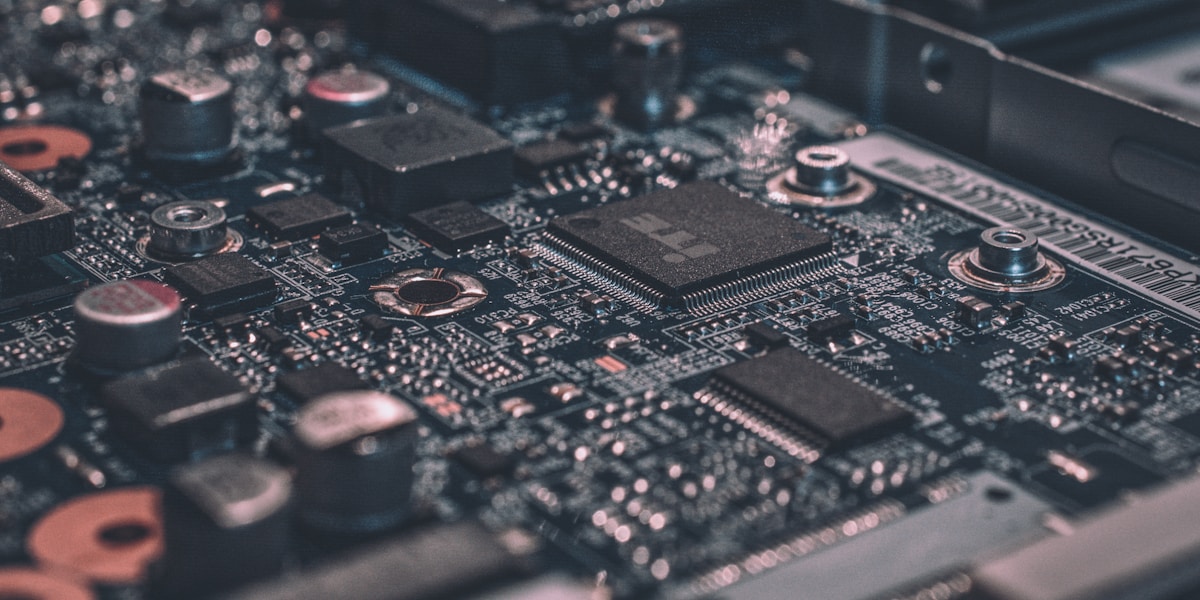
PCB (printed circuit board) manufacturing: Chinese manufacturers operate dedicated PCB facilities ensuring tight quality controls and consistent performance. Indian manufacturers predominantly outsource PCB production relying on third-party suppliers with less direct quality oversight.
Price Differential Analysis
Chinese P3 indoor panels: ₹25,000-₹35,000 per sq meter FOB (factory gate price). Adding import duties, GST, logistics creates landed cost ₹45,000-₹55,000 per sq meter in India.
Indian-manufactured P3 panels: ₹40,000-₹55,000 per sq meter (manufacturer to distributor pricing). Retail pricing reaches ₹50,000-₹65,000 per sq meter including dealer margin.
Apparent price parity masks significant differences: Chinese panels FOB price reflects 20-25% profit margin for manufacturers. Indian manufacturers earn 15-20% margin on higher base cost. Added import duties and logistics create actual pricing convergence despite fundamentally different cost structures.
Budget segment divergence: low-cost Chinese panels (Gama, Novastar technology suppliers) sell at ₹20,000-₹25,000 FOB creating landed cost ₹35,000-₹45,000. Equivalent Indian budget panels cost ₹35,000-₹45,000 factory price creating ₹45,000-₹55,000 retail pricing. Budget segment favors imports offering 20-30% price advantage.
Premium segment convergence: high-end Chinese brands and top-tier Indian manufacturers price similarly (₹50,000-₹65,000 per sq meter) competing on brand reputation and service rather than price.
Warranty and After-Sales Support Comparison
Chinese brand warranties: large established brands (Absen, Liantronics, Leyard) offer 2-3 year standard warranties with optional 5-year extended coverage. Warranty covers manufacturing defects but typically excludes environmental degradation or physical damage. Warranty claims processed through authorized Indian distributors (5-10 day resolution typical).
Chinese budget brands warranty: typically 1-year limited warranty covering factory defects only. Claims processed through online portals (slow, averaging 2-3 weeks) or small distributor networks with limited support infrastructure.
Indian manufacturer warranties: tier-1 Indian brands offer 3-year comprehensive warranties with labor and module replacement included. Mid-tier manufacturers offer 2.5-year warranties. Budget manufacturers provide 1-year basic coverage. Indian warranties provide superior support due to localized service infrastructure.
Practical warranty experience: Chinese brand warranty claims require shipping panels to service centers or relying on on-site technicians (slower process). Indian warranty claims typically resolved through local service centers within 24-48 hours for metro locations and 5-7 days for tier-2 cities.
Durability and Lifespan Comparison
Rated LED lifespan: Chinese quality panels specify 100,000+ hours (11+ years at 24/7 operation). Indian quality panels claim equivalent lifespan. Actual field performance: 40-50% brightness degradation occurs at 50,000-60,000 operating hours for both Chinese and Indian quality panels.
Environmental durability: Chinese outdoor panels designed in Shenzhen (subtropical maritime climate) face similar challenges to coastal India. Weatherproofing effectiveness excellent matching Indian requirements. Indian outdoor panels engineered for Indian monsoon and dust conditions potentially offering marginal advantages in extreme environments.
Thermal management: Chinese manufacturers optimize cooling for 35-40°C ambient (standard industrial design). Indian manufacturers design for 40-45°C ambient specifically targeting Indian climate. In practice, performance differences negligible—both technologies handle Indian conditions when properly installed.
Thermal degradation: LED brightness decreases 1-2% per 1000 hours operation at 55°C operating temperature. At 70°C (excessive thermal stress), degradation accelerates to 3-4% per 1000 hours. Poorly cooled panels of either origin experience rapid degradation. Well-cooled panels of both origins maintain performance.
Component reliability over 5 years: Chinese quality panels demonstrate 0.5-1% annual failure rate. Indian quality panels show 0.8-1.2% annual failure rate. Budget Chinese or Indian panels show 2-3% annual failure rates. After 5 years: Chinese quality panels retain 97-98% functionality, Indian quality 96-97%, budget panels 85-90%.
Total Cost of Ownership Analysis
10-year TCO for a 50 sq meter P3 display:
Chinese quality option (Absen/Liantronics): Panel purchase ₹25,00,000 (FOB ₹12,50,000 + duties/logistics ₹12,50,000). Annual maintenance ₹50,000. Module replacements over 10 years ₹3,00,000. Support and spares ₹2,00,000. Total: ₹32,50,000. Equivalent cost per sq meter per year: ₹650.
Indian quality option (Bharat LED/Leyard India): Panel purchase ₹27,50,000. Annual maintenance ₹40,000. Module replacements ₹2,50,000. Support and spares ₹1,50,000. Total: ₹33,90,000. Equivalent cost per sq meter per year: ₹678.
Budget Chinese option (imported low-cost): Panel purchase ₹20,00,000. Annual maintenance ₹100,000. Module replacements ₹8,00,000 (higher failure rates). Support and spares ₹3,00,000. Total: ₹32,00,000. Equivalent cost per sq meter per year: ₹640. Despite cheaper panels, budget option shows inferior TCO due to excessive maintenance and replacements.
Budget Indian option: Panel purchase ₹22,50,000. Annual maintenance ₹80,000. Module replacements ₹5,00,000. Support and spares ₹2,00,000. Total: ₹30,30,000. Equivalent cost per sq meter per year: ₹606.
TCO ranking: Budget Indian (₹30,30,000) outperforms all options, followed by Budget Chinese (₹32,00,000), Chinese quality (₹32,50,000), and Indian quality (₹33,90,000). However, this analysis assumes identical failure rates—in practice, Chinese quality panels experience significantly fewer failures resulting in better practical TCO despite higher purchase price.
Service Network Comparison
Chinese brand service network: major brands maintain 30-50 authorized service centers concentrated in metro areas. Response times: 24-48 hours in metro areas, 7-14 days in tier-2 cities, 14-30 days in tier-3 cities. Small cities often lack direct service requiring panel shipment to regional centers.
Indian service network: tier-1 manufacturers operate 40-50 service centers with broader geographic distribution including tier-2 and 3 cities. Response times: 24 hours metro areas, 3-5 days tier-2 cities, 7-10 days tier-3 cities. Local service advantages particularly valuable for smaller cities.
Spare parts availability: Chinese brands maintain India distribution warehouses ensuring 2-3 day spare parts delivery in major cities. Smaller parts (LEDs, drivers) ship within 24 hours. Indian manufacturers stock spares locally with same-day or next-day delivery in most cities.
Technology and Feature Comparison
Advanced features: Chinese manufacturers develop cutting-edge technologies first—transparent LED displays, curved displays, fine pixel pitch innovation (P1.2, P1.6). Indian manufacturers typically follow 1-2 years behind adopting proven Chinese technologies.
Content management: Chinese brands offer sophisticated cloud-based content management, remote monitoring, and predictive maintenance features. Indian manufacturers increasingly offer similar functionality though sometimes with slightly delayed feature releases.
Customization: Chinese manufacturers handle massive customization (specialty pixel pitches, non-standard module sizes, proprietar driver designs). Indian manufacturers offer customization but with longer lead times and premium pricing.
When to Import vs. Buy Local
Import Chinese panels when: budget is primary concern and can tolerate 2-4 week lead times, large volume (500+ sq meters) justifies import effort, specific technology unavailable from Indian manufacturers, project requires exotic specifications unlikely from Indian suppliers.
Buy Indian panels when: quick delivery required (days vs. weeks), strong after-sales support critical for your project type, willing to pay 5-10% premium for local support and service, medium project size (50-200 sq meters) where import complexity adds proportionally more cost.
Hybrid approach: many sophisticated buyers import core panels for cost savings while engaging Indian integrators for installation, support, and service. This approach balances price competitiveness with service reliability.
Conclusion
Chinese and Indian LED panels occupy distinct market positions: Chinese suppliers excel in technology leadership, extreme cost optimization, and specialized capabilities at massive scales. Indian suppliers provide service responsiveness, warranty support, and reasonable pricing for mainstream applications. Quality differences diminish at premium price points. For budget-conscious projects seeking lowest TCO over 10 years, carefully specified quality Chinese or budget Indian options provide excellent value. For mission-critical applications requiring reliability and support, tier-1 Indian manufacturers or premium Chinese brands justify premium pricing through superior warranty, support, and demonstrated reliability.